
Is This Termites? 7 Photos Homeowners Send Us That Usually Are Not
- Jameson Elam

- Feb 5
- 7 min read

About the Author: Jameson Elam is the owner and operator of Good Sense Termite, serving Alameda, Santa Clara, San Mateo, and Santa Cruz counties. With over 14 years of hands-on experience in the termite control industry, Jameson specializes in thorough inspections, accurate diagnostics, and long-term solutions tailored to California homes. His deep knowledge of local termite behavior and building structures has made Good Sense Termite a trusted name for homeowners and real estate professionals alike.
The Text We Get All The Time: “Is This Termites”
Smart homeowners do not wait for a full swarm. They see something weird, take a quick photo, and send it over.
We get a lot of:
“Is this termite poop”
“Is this mud tube”
“Is this a termite wing”
“Is this just dry rot”
Sometimes, it really is termites. A lot of the time, it is something else, and the stress is way higher than it needs to be.
This post walks through the most common “is this termites” photos we see and what they usually are instead, plus when you should definitely still call for an inspection.
Note: photos are helpful, but they are not the same as a full inspection. Think of this as a guide, not a final verdict.
1. Coffee Grounds On The Floor: Termite Droppings Or Something Else

What we get photos of: Small piles of brown or tan specks on:
Window sills
Under baseboards
In the corners of closets
Homeowner caption: “Termite droppings”
What it sometimes is:
Termite pellets (frass) from Drywood termites
Ant debris
Dirt tracked in from shoes or pets
Bits of crumbled grout or plaster
How termite pellets usually look:
Fairly uniform, tiny hard pellets
Often slightly hexagon or oval if you look close
Very dry, not smeared or mushy
Tend to re appear in the same spot even after cleaning
When to be more suspicious:
Pile keeps coming back in the same place
Pellets appear under wood trim, old windows, or in ceiling corners
You see tiny kick out holes nearby in wood
If anything keeps returning after you clean it, that is worth an inspection.
2. Random Smear On The Wall: Mud Tube Or Old Stain
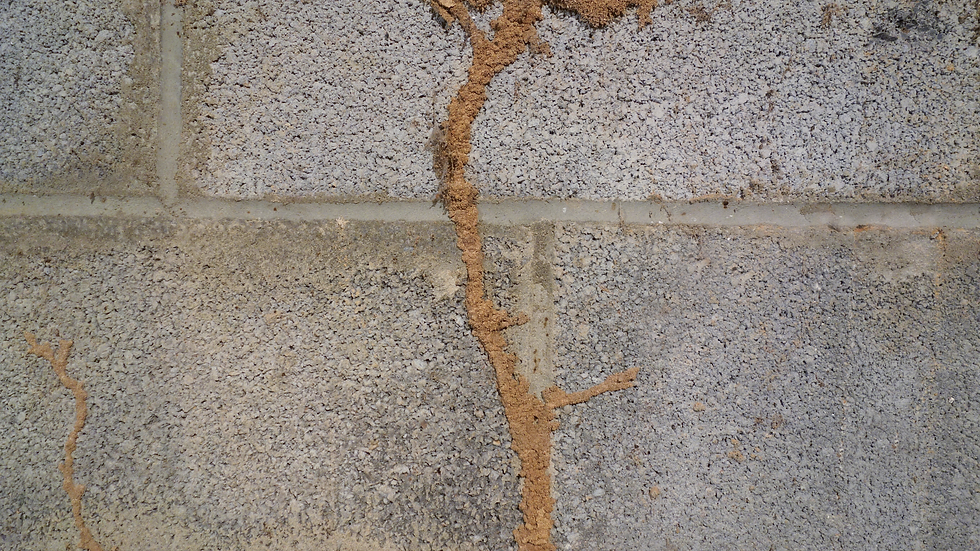
What we get photos of: Brown streaks or patches on:
Foundation walls
Garage walls
Lower sections of exterior stucco
Homeowner caption:“Is this a termite tube”
What it sometimes is instead:
Old splash from dirt or mud
Rust stain from a metal item that used to sit there
Paint drips or old sealant
Efflorescence (mineral stains) from moisture
How termite tubes usually look:
Raised from the surface, not flat like paint
Textured, crumbly mud if you scrape a bit
Often run vertically from soil up to wood or between cracks
Quick test you can do without damage:
Look from the side. Is it built up or flat
Think about the story. Does it run from soil or a crack to a material termites would like
When in doubt, do not scrape everything off trying to prove it. Take clear close photos and call for an inspection.
3. Single Wing On The Counter

What we get photos of: One lonely wing on a countertop, sink, or floor.
Homeowner caption: “Termite wing, right?”
What it sometimes is instead:
A random insect wing blown in from outside
One of a pair from an ant swarmer
Something carried in by a pet
How termite swarmers differ from ant swarmers:
Termite wings: front and back wings about the same length
Ant wings: front wings longer than back
Termite bodies: straight, broad waist
Ant bodies: pinched waist
When to be more suspicious:
You find many identical wings in one area, especially near light sources or windows
You see the actual swarmers along with wings
Wings appear near baseboards, slider tracks, or foundation cracks
One random wing is not proof. A pile of wings in one spot deserves attention.
4. Weird Lines In Wood: Termite Damage Or Just Grain

What we get photos of:
Close up shots of:
Old framing
Subfloor from under the house
Exposed beams
Homeowner caption: “This looks eaten, right?”
What it sometimes is instead:
Natural wood grain
Old saw marks from milling
Shrinkage cracks
How termite damage usually looks up close:
Tunnels and galleries that follow the grain but leave thin layers of wood
Ragged, carved out areas rather than smooth, even lines
Sometimes packed with mud (Subterranean termites)
Often hidden behind a thin intact surface
If you can push a screwdriver into framing more easily than it seems like you should, or if the wood feels hollow and you see channel patterns, that is something we want to see.
5. Flaky Baseboard Or Door Casing: Fungus, Wear, Or Termites

What we get photos of:
Baseboards with chipped paint
Door casings with swollen or flaking sections
Lower trim that looks rough and tired
Homeowner caption:“Is this termite damage”
What it often is instead:
Old water damage from past leaks or mopping
Swollen MDF trim that got wet
Paint failure in damp rooms
How termite damage differs:
Wood itself feels softer or hollow, not just the paint
Pieces may break away in layered chunks, showing galleries inside
You might see pellets or fine dust along the floor or sill
If only the paint is bubbling or flaking, it may be a moisture or age problem. If the material behind the paint crumbles or collapses, that is a bigger concern.
6. “Dry Rot” Found During Repairs

What we get photos of:
Pictures from contractors showing:
Damaged subfloor around toilets or tubs
Dark, crumbly wood under showers
Cracked tile or sagging areas
Homeowner caption: “Contractor says dry rot, should we be worried about termites”
What it sometimes is:
True fungus damage from long term moisture
Old leaks that were never fully fixed
A mix of fungus and insect damage
Many people use “dry rot” as a catch all. Termites and fungus often like the same damp, stressed spots, so both can be present.
Clues termites might be involved too:
Mud tubes nearby on piers or foundation
Pellets or fine dust where wood meets framing
Past “fixes” in the same room that did not fully hold up
Any time structural wood is opened up or replaced, it is smart to have a termite inspector look, not just rely on the word “dry rot.”
7. Something In The Crawlspace That Just Feels Wrong

What we get photos of:
Phone shots from under the house showing:
Dark soil
White or gray growth on wood
Odd piles or debris
Homeowner caption:“I do not know what this is, but it feels bad”
What it might be:
Fungus growth
Old construction debris
Past DIY attempts to “treat” something
Active Subterranean tubes if we look closer
Crawlspace photos are often blurry and cramped. That is ok. If you were motivated enough to go under there and something made you uneasy, that alone is a valid reason to call.
We care about:
Pattern
Is damage or growth limited to one spot or spread out
Location
Is it under a bathroom, kitchen, or low corner
Context
Does it line up with history of leaks or floor issues
When A Photo Is A Good Start And When It Is Not Enough
Photos are great for:
Quickly ruling out obvious non termite items
Giving you some peace of mind in simple cases
Helping us decide how urgent an in person visit might be
Photos are not enough when:
The same issue keeps coming back after you clean it
There is any sign of structural movement or sagging
You already have a history of termite or fungus issues in that area
The photo is from inside a wall, crawlspace, or attic that clearly has more going on than one small spot
If we tell you “this might be termites” based on a photo, that is not the finish line. That is your cue to let us see the structure itself.
How Good Sense Termite Uses Your Photos
When you send us a photo, our goal is not to scare you or dismiss you. It is to sort your situation into one of these buckets:
Very likely not termites
We tell you why it looks that way
We may suggest simple things to watch or clean
Possibly termites or fungus, not clear from the photo
We explain what we would need to see in person
We recommend an inspection if it makes sense
Highly suspicious for termite or fungus activity
We explain the concern in plain language
We suggest an on site inspection and what we will focus on
For Bay Area homes not in active escrow, our inspections are free. For homes in escrow, we provide fee based inspections that meet real estate standards.
Either way, the goal is simple: turn “I have a scary photo” into “I know what this actually is and what to do next.”
FAQ: Photo Triage For Possible Termites
Q: Can you diagnose termites from a photo only?
Sometimes we can say “very likely not termites.” We are more careful about saying “this is definitely termites” without seeing the structure. Photos are a starting point, not a full diagnosis.
Q: If the pellets or dust stop, does that mean the termites are gone?
Not necessarily. Activity can be intermittent. If pellets showed up more than once in the same area, get it checked, even if it pauses.
Q: My contractor already replaced the damaged wood. Is it too late to call?
It is not too late to ask questions. We can still inspect surrounding areas, crawlspaces, and other parts of the structure to see if any activity remains.
Q: How many photos should I send if I am worried?
Send a close up and a wider shot that shows where the issue is in the room or structure. That helps us understand context, not just the texture of one small spot.
Final Thoughts: Do Not Argue With Your Baseboards In The Group Chat
If you find yourself zooming in on the same weird spot over and over and texting friends “do you think this is termites,” you do not need a bigger group chat. You need clearer information.
Take the photo. Send it if you want. Then let a licensed inspector look at the actual structure and translate what it means for your home.
If you are in the Bay Area and want to turn “is this termites?” into a real answer, we are ready.
Schedule an inspection with Good Sense Termite. We will look at the evidence, not just the pixels, and give you a plan that makes sense.
It's just Good Sense.


Comments